A real-world example for a theoretical movie theater game room
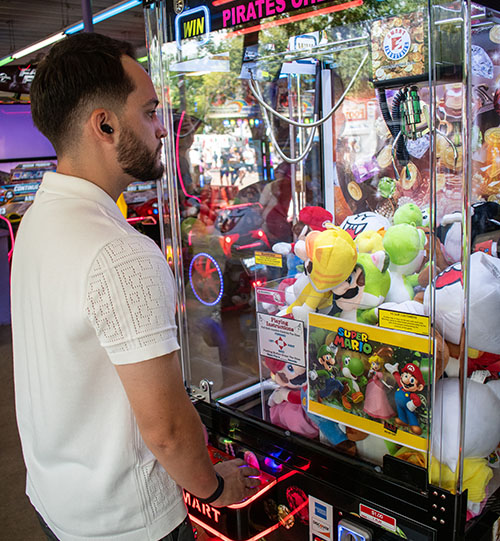
Let’s say a local movie theater wants to upgrade its arcade room.
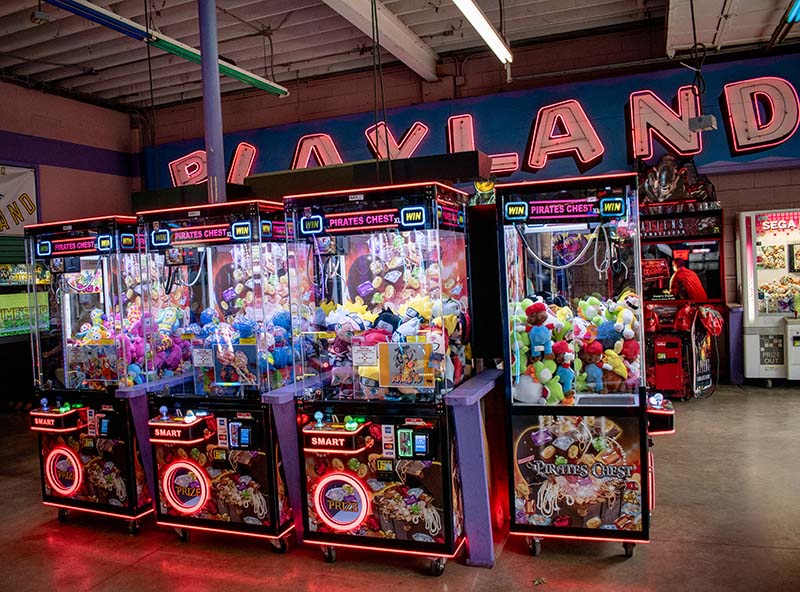
They have 15 claw machines and video games in a dedicated space near the lobby. Right now, the games accept cash only. The theater sees strong foot traffic on weekends and during summer blockbuster season — but many guests walk by without playing.
They’re considering switching to a modern, cashless arcade system. What would it actually cost to implement Cantaloupe Play — and how might the economics look?
Let’s break it down.
Step 1: Hardware investment
For a 15-machine arcade room, the theater would need:
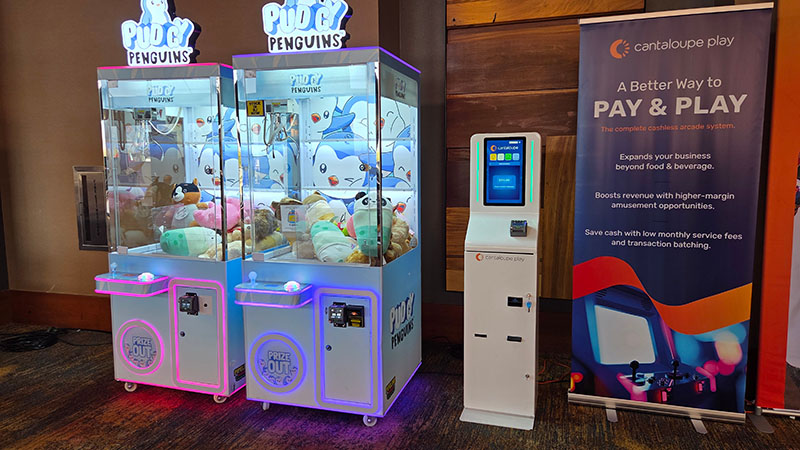
- 1 Cantaloupe Play kiosk
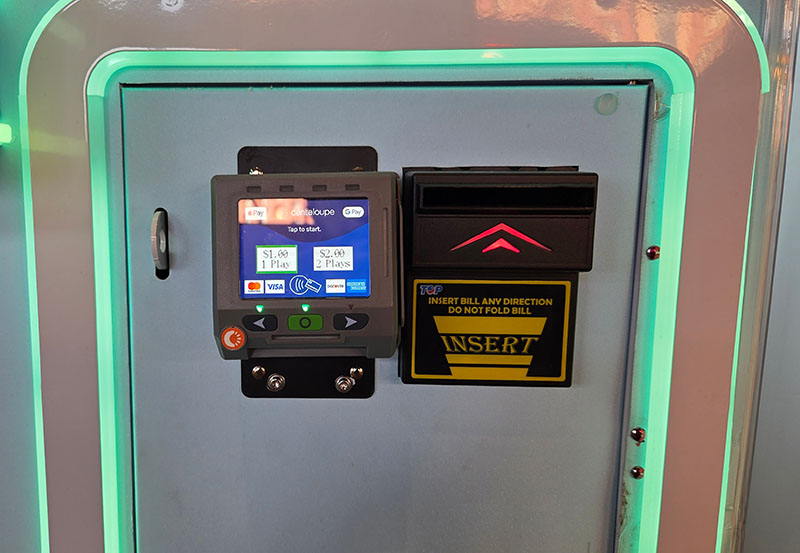
- 15 Engage Lite card reader kits
- 1 Bluetooth hub
- Play Cards for customers
Estimated hardware costs
(Based on current referenced pricing from internal materials)
- Cantaloupe Play kiosk: $7,995
- Engage Lite card readers: $299 x 15 = $4,485
- Bluetooth hub: $399
- Play Cards (500 cards to start): ~$0.75 each = $375
Estimated hardware total: $13,254
This is a one-time equipment investment to convert the arcade room into a centralized card-based system that supports credit, debit, mobile wallet, and Play Card transactions.
Step 2: Monthly service fees
Unlike some competitors charging $400/month for arcade systems, Cantaloupe Play pricing is structured differently.
From IAAPA pricing references:
- General service fee: ~$40–$50/month
- $1/month per installed card reader
For this 15-machine location:
- Base service: ~$50/month
- Reader fees: $15/month
Estimated monthly service cost: ~$65/month
This covers system access, reporting via Seed Live, transaction management, and batching functionality.
Step 3: Understanding transaction fees
Here’s where the model becomes important.
With standalone card readers, every single tap could trigger a separate processing fee. In a movie theater arcade, that might look like:
- A teenager swipes 10 times across different games.
- That could mean 10 processing events.
With Cantaloupe Play, value is loaded onto a Play Card at the kiosk. Behind the scenes, multiple plays from the same customer card are batched together (up to a set threshold) before processing.
That means:
- Fewer total processing events
- Fewer per-transaction fees
- More predictable fee structure in high-play environments
In a setting like a movie theater — where players often move from machine to machine — batching can significantly reduce the number of individual processing charges compared to standalone readers.
Step 4: Revenue potential shift
Now let’s layer in industry data.
From the 2025 Micropayment Trends Report:
- Cashless amusement ticket size: $6.04
- Cash ticket size: $0.81
- 645% difference
If this 15-machine room is currently cash-only, average plays are likely limited by the cash customers carry. Once guests can tap their card or load $20–$40 onto a Play Card before a movie starts, spending behavior changes.
Even though only 22% of amusement transactions were cashless in 2024, they represented 66% of total sales volume.
For a movie theater with heavy weekend traffic, enabling frictionless play before and after showtimes can materially increase per-guest spending — without adding staff.
Step 5: Operational efficiency gains
Beyond revenue, there are operational differences:
Centralized reconciliation
Instead of emptying 15 cash boxes and reconciling manually, funds are loaded digitally and tracked through Seed Live.
Remote visibility
Operators or theater management can monitor machine activity and revenue from a single dashboard.
Scalable structure
Cantaloupe Play supports up to 50 machines per kiosk and holds up to 450 Play Cards at once, meaning this 15-machine setup leaves room to grow without changing infrastructure.
How much does it cost?
For this imaginary 15-machine movie theater arcade:
- Upfront investment: ~$13,254
- Estimated monthly system cost: ~$65
- Processing model: Batched transactions to reduce fee events
- Capacity: Built to scale up to 50 machines
Compared to patchwork solutions — or higher monthly competitor pricing — this structure offers:
- A predictable cost model
- Centralized management
- Modern payment flexibility
- A system designed specifically for small-to-mid-sized arcade environments
Is It the right fit?
Cantaloupe Play isn’t built for massive family entertainment centers with redemption counters and hundreds of games. It’s designed for locations like this movie theater example:
- Dedicated game rooms
- 10–50 machines
- High foot traffic
- Limited on-site staffing
For operators in that range, the question isn’t just “Should we go cashless?”
It’s “Should we treat each machine independently — or build the entire room as one connected system?”
Because once you cross into multi-machine territory, how payments are structured matters just as much as how much people spend.
Fast Facts
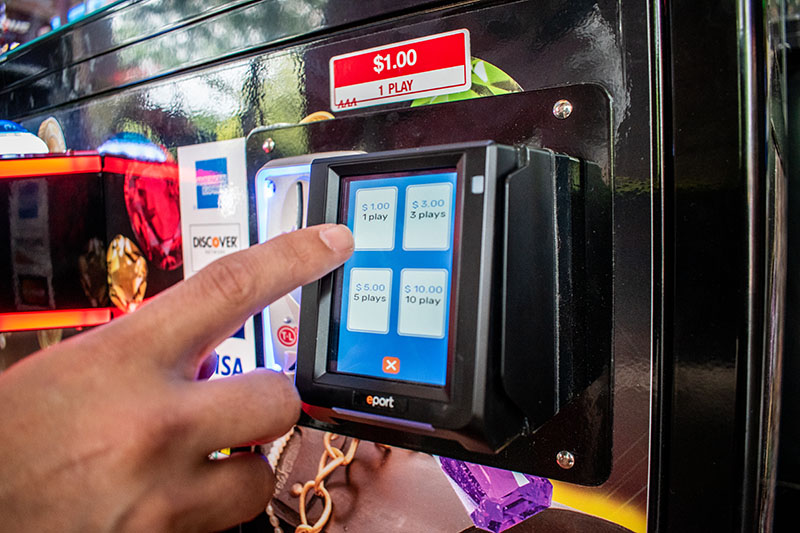
Amusement machines are quickly becoming one of the fastest-growing opportunities in self-service retail. Here, we break down the trends, payment data, and technology making it easier than ever for vending operators to add games—and unlock new revenue streams.
As players demand faster, frictionless gameplay, cashless systems are taking over. Tap-to-play card readers are driving higher spend, fewer breakdowns, and smarter insights for operators. From boosted revenue to real-time data and plug-and-play setups, this article breaks down why cashless is no longer optional — it’s the future of play.
Cashless payments changed arcade spending — but standalone card readers only solve part of the problem. Explore why more operators are moving to integrated arcade payment systems and how that shift can simplify operations while unlocking new growth.