Every self-service location has a unique personality. Some people rush in, grab a drink, and head straight back to work. Others browse for lunch, linger around and chat with coworkers. Some shoppers visit the same space for the same thing every day.
That’s why the question for operators shouldn’t simply be, “Should I install a micro market or a Smart Store?” It should be:
How do people actually use this space?
Your location is already telling you which self-service retail format it needs. The key is learning how to listen. That’s becoming increasingly important as the self-service retail industry, and the economy, enter a new phase of growth.
The 2026 Micropayment Trends Report found that micro markets continued to expand in 2025, and accounted for over $1 billion in sales, while Smart Stores saw explosive growth of more than 700%. But the larger story isn’t that one format is replacing another. Growth is becoming more targeted, with performance increasingly dependent on location, timing, and use case.
So rather than asking which format is “better,” operators should think about which one best matches the people, routines, and shopping habits at a specific location.
Start by watching how people move
Think about two locations that look almost identical on paper. They should have similar foot traffic, similar demographics, and roughly the same number of potential customers. Yet one could become an ideal micro market location, while the other might perform better with a Smart Store.
Why? Because traffic alone doesn’t tell you how people shop.
In an office, manufacturing facility, or hospital, people may spend hours in the same building. They have predictable breaks, repeat meal occasions, and time to browse. That behavior can make a micro market appealing because it offers open shelves, refrigerated options, beverages, and everyday essentials in a more traditional retail environment.
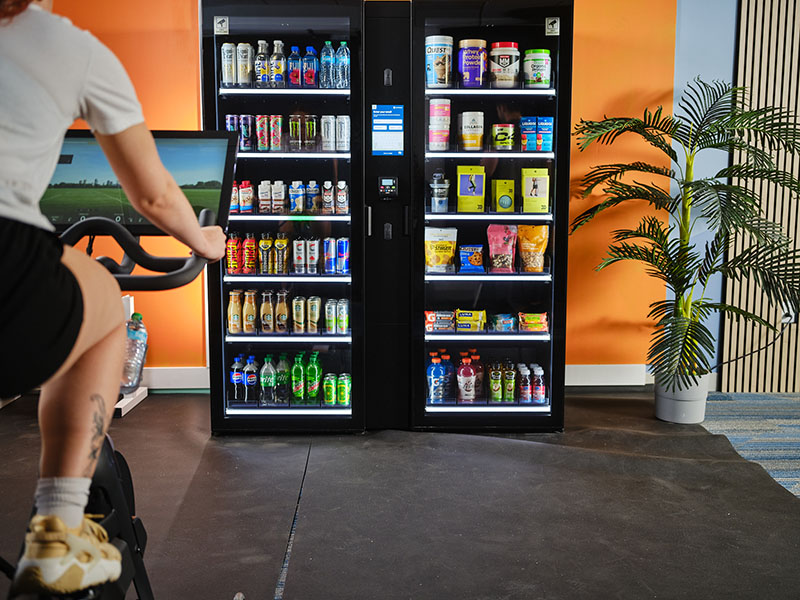
Now think about a 24-hour gym. Members may spend plenty of time in the building, but their shopping behavior is different. They’re moving between their car, the locker room, and their workout. They may want pre-workout before their set, a protein bar afterward, or ear buds because they forgot theirs at home. In that environment, speed and access can matter more than the ability to browse.
Figure out why they’re shopping
The next question is simple: Why is the customer buying something? That shopping mission can tell you a lot about the format that may work best.
Micro markets can thrive when customers are making intentional purchases throughout the day. Someone might buy breakfast in the morning, come back for a beverage later, and return again for lunch.
The broader consumer data supports the value of those repeat routines. The 2026 Micropayment Trends Report found that routine spending remains one of the most reliable sources of demand. Consumers are still prioritizing everyday purchases connected to work, school, and home life, even as they become more selective about spending overall.
The product mix can then be tailored around the people using each individual market. We’ve previously recommended testing products by location rather than assuming an item will perform the same across an entire route. A higher-priced salad, for example, may resonate differently in one demographic than a lower-priced breakfast sandwich in another. Sales data can reveal which products succeed at specific locations and help operators refine the assortment accordingly.
That’s an important point: the location should shape the assortment, not the other way around. Smart Stores follow the same principle, but they can be especially useful when the shopping mission is more immediate.
A shopper may need a charger at a hotel, detergent in a residential building, or a recovery drink at a gym. Smart Stores give operators flexibility to merchandise beyond traditional snacks and beverages while maintaining a fast, unattended buying experience. Cantaloupe operators have used Smart Stores for wellness products, fresh items, tech accessories, sundries, and other site-specific products.
What’s easiest for the consumer?
Another clue is what gets in the customer’s way. Are people waiting? Are checkout lines inconvenient? Are customers walking away because the existing format doesn’t have what they want?
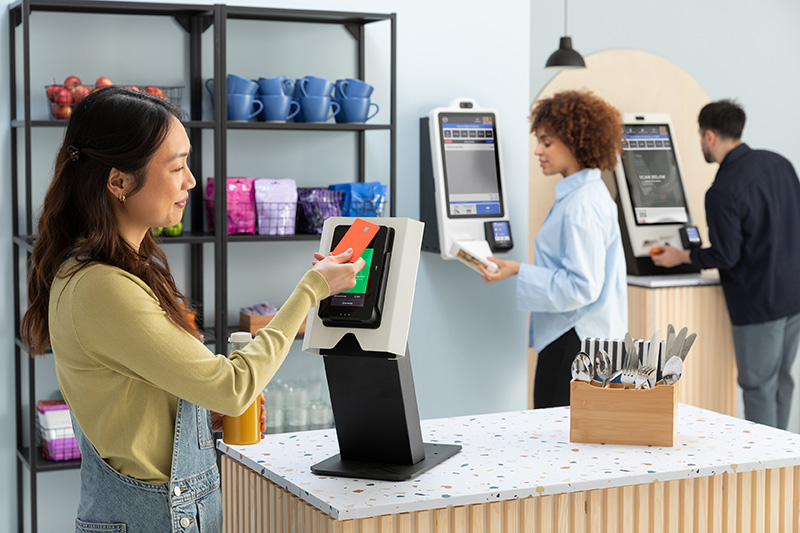
Consumers increasingly expect self-service purchases to be quick and cashless. In 2025, cashless payments represented 78% of vending sales, while micro markets were nearly 100% cashless and Smart Stores operated completely cashless. Contactless payments also made up 85% of cashless vending sales.
Removing friction matters because convenience isn’t just about product availability. It’s about how quickly a shopper can recognize a need, make a purchase, and continue with their day.
Smart Stores can be especially powerful in environments where that friction is obvious. Cantaloupe’s Smart Store research points to high-traffic locations, 24/7 environments, and locations where broader product selection or faster checkout can unlock sales that traditional vending may miss.
Don’t assume Smart Store means “upgrade”
There’s another trap operators should avoid: treating self-service retail like a ladder. Vending becomes a micro market. A micro market becomes a Smart Store. The newest technology automatically becomes the next step.
That isn’t what the market data suggests. Micro markets remain a major growth engine, with 2025 sales increasing 13% year over year. Smart Stores, meanwhile, are growing rapidly from a much smaller base and recorded the highest average ticket across self-service formats at $4.49.
Those aren’t competing signals. They point to a more diversified industry. Micro markets may be ideal when shoppers benefit from a broad, open retail experience and predictable repeat purchasing.
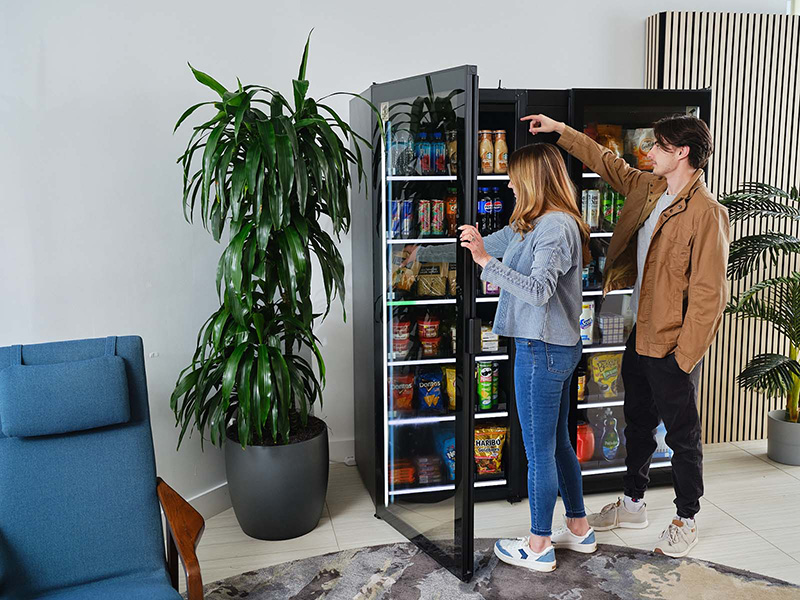
Smart Stores may be ideal when operators need secure unattended retail, frictionless access, or product flexibility in locations where a traditional micro market may be harder to operate.
And sometimes a traditional vending machine is still exactly what the location needs. The smartest operator isn’t necessarily the one deploying the newest format everywhere. It’s the one matching the format to the location.
Fast Facts
- Location matters: Foot traffic alone doesn’t determine success—the way people actually shop in a space can help determine which format fits best.
- Routine drives demand: Repeat, everyday purchases remain one of the most reliable sources of consumer spending.
- Convenience is critical: Today’s consumers increasingly expect self-service purchases to be fast, easy, and cashless.
- Newer isn’t always better: Micro markets, Smart Stores, and even traditional vending can all be the right choice when matched to the needs of a specific location.
Your location is telling you whether it needs a Smart Store or Micro Market
So before choosing between a micro market and a Smart Store, spend some time watching.
How long do people stay? When do they shop? Do they return every day? What are they buying? What products are they leaving the building to find? Where is there friction.
Those questions tell you far more than square footage or headcount alone.
Our data shows that self-service retail growth is becoming more strategic. Consumers remain focused on value and convenience, but demand increasingly depends on the location and the moment in which a purchase happens.
That’s ultimately why there may never be a winner in the micro market vs. Smart Store debate. Every location is telling a story. The question isn’t whether a micro market or a Smart Store is inherently better. It’s which one fits the people who use that space every day.
Operators who learn to recognize those routines, needs, and moments of convenience will be in the best position to create self-service retail experiences that customers actually use—and businesses can continue to grow.
Canteen of Northern California’s work with a local college is a testament to the transformative power of cutting-edge retail solutions. The outcomes are impressive: substantial sales growth, more efficient inventory control, and heightened customer satisfaction. By embracing innovative technology, traditional vending operations were revolutionized, yielding exceptional results.
In this episode of Retail on the Go, Tony Danna, an industry expert with over 8 years of experience in the vending industry, joins us to discuss securing your micro markets and preventing theft. We explore various security measures such as cameras, abandoned shopping cart systems, smart locks, and signage. Tony emphasizes the importance of a good working relationship with the location to curb theft and provides tips on how to set up theft-deterring contracts. He also highlights the advancements Calculo is making in theft prevention, including smart locks, smart coolers, and AI-powered coolers. Tony predicts that in the next 5 to 10 years, we’ll see more affordable and technologically advanced micro markets, similar to Amazon Go stores.
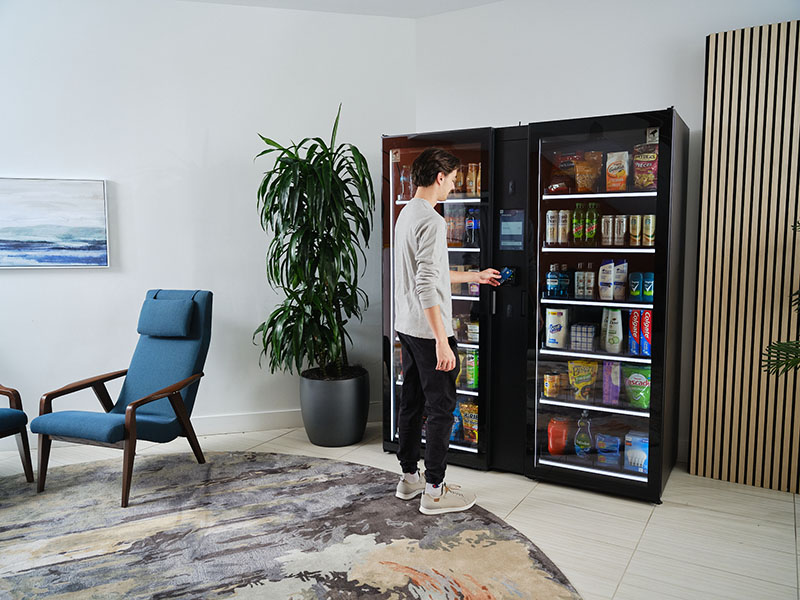
A wave of next-gen, self-service retail is transforming how and where consumers shop — and it’s not just hype. Dive into the real stories of operators breaking sales records, delighting customers, and redefining convenience through the rise of Smart Stores.